Book Lover Cat SVG
A Quiet Charm That Stitches Well—If You Choose the Right Canvas
As someone who’s stitched everything from delicate baby onesies to rugged denim tote bags, I opened Book Lover Cat SVG expecting whimsy—and got something more useful: a gentle, confident little character with real embroidery potential. It’s not flashy. It doesn’t shout. But that’s exactly why it works so well for handmade products where warmth and intention matter more than trend-chasing.
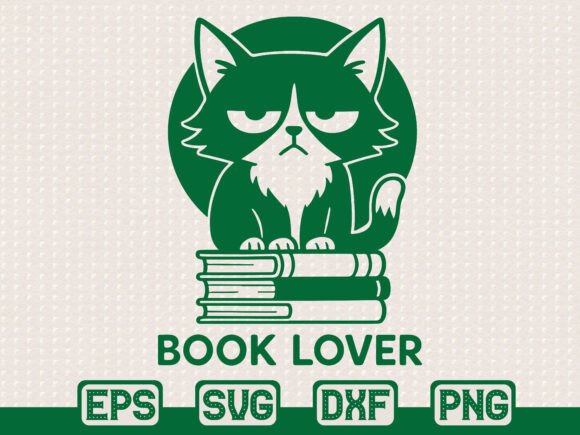
I tested it first on a natural linen tea towel—lightweight, slightly textured, no stretch. The cat sits curled beside an open book, paws tucked, tail looping softly around the spine. No bold outlines, no aggressive gradients—just clean negative space, soft curves, and subtle layering in the book’s pages and fur texture. That simplicity translates beautifully to stitch: fewer tiny jumps, less risk of thread nesting, and room for satin stitch to breathe without overcrowding.
Where This Design Truly Shines (and Where It Pauses)
It’s a natural fit for:
- Embroidered tote bag design—centered on the front panel, sized at 3.5" wide, it reads clearly from across a craft fair booth;
- Baby embroidery on a cotton knit onesie (with lightweight cutaway stabilizer)—the rounded shapes avoid sharp corners that snag tiny fingers;
- Pillow covers and nursery decor, especially in muted thread palettes (oatmeal, slate, deep navy) that lean into its quiet literary mood;
- Personalized gifts—add a name in simple block script below the cat, and you’ve got a thoughtful, non-cutesy present for teachers, librarians, or book club hosts;
- Small shop product on unbleached canvas aprons—stitched in ecru thread, it feels artisanal, not mass-produced.
But tread thoughtfully with:
- Curved surfaces like caps or beanies—the cat’s horizontal posture and book layout don’t adapt well to crown curvature without repositioning or resizing;
- Thin or slippery fabrics (silk blends, rayon challis)—the fill stitch areas need solid stabilization, and the design’s modest detail level won’t mask puckering;
- Dark fabric without contrast testing—the subtle shading in the book’s pages can disappear unless you choose high-contrast thread (e.g., cream on charcoal, not beige on black);
- High-wash items like kids’ tees or kitchen towels—check stitch density before finalizing; tight fills hold up better, but overly dense areas may stiffen the fabric over time.
What Customers Actually Notice (Not Just What We Stitch)
Here’s the truth: buyers don’t care about your hoop size or stitch count. They feel whether a design looks *intentional*. Book Lover Cat SVG lands as thoughtful—not generic, not forced. When stitched cleanly on a heavyweight organic cotton sweatshirt, it reads as “curated,” not “clip art.” That perception lifts perceived value, builds trust, and makes repeat buyers more likely. On Etsy, I’ve seen similar designs perform best when paired with honest listing photos showing the actual embroidered result—not just digital mockups.
It also avoids visual fatigue. Unlike busier T-shirt designs, this one doesn’t compete with patterns or prints. That means it plays nicely on striped shirts, gingham tea towels, or textured woven blankets. For boutique branding, it’s flexible enough to sit alongside hand-lettered quotes or minimalist botanical motifs—no clashing personalities.
Practical Notes Every Embroidery Designer Should Run Through
Before committing to a client project or bulk production, here’s what I do—and recommend you do—with Book Lover Cat SVG:
- Test on scrap fabric that matches your final substrate—especially if using textured weaves or knits;
- Check thread color contrast in both daylight and indoor lighting; soft grays and creams often look richer in person than on screen;
- Review stitch density—if the file includes multiple layers (e.g., book pages as separate fill zones), verify they’re optimized for smooth transitions, not stacked density;
- Confirm hoop size compatibility—this design fits comfortably in a 4x4 hoop, but double-check if your machine requires centering adjustments;
- Inspect small details—the cat’s ear tip and book corner are delicate; zoom in on the embroidery file to ensure no stray nodes or under-digitized curves;
- Test black-and-white mockups—it helps spot unintended contrast issues before stitching;
- Compare light vs. dark backgrounds using physical swatches, not just screen previews;
- Use appropriate stabilizer—cutaway for knits, tear-away for stable wovens, and consider topping for napped fabrics like terry cloth;
- Verify licensing—since this is marketed as a T-Shirt Designs bundle for POD platforms, confirm whether commercial embroidery rights are included before selling finished embroidered goods or digital embroidery files.
Final Thought: A Design That Supports Your Craft, Not Just Fills Space
Book Lover Cat SVG isn’t trying to be everything. It’s a focused, calm, well-proportioned machine embroidery design that serves a real niche: readers, quiet creatives, gift-givers who value meaning over flash. As a digital embroidery file, it’s adaptable—not rigid. As a handmade product element, it adds personality without overwhelming. And as a small shop product or Etsy seller asset, it invites storytelling: “This was stitched for someone who underlines passages and rereads favorites.”
If you’re building a catalog of meaningful, stitch-ready Graphics, this one earns shelf space—not because it’s trendy, but because it’s trustworthy. It behaves on fabric. It resonates with people. And it leaves room—for your skill, your voice, and the quiet joy of making something that feels truly made.