Burmese Cat SVG Silhouette Clipart Set
A Clean, Confident Silhouette—Not Just Another Cat Graphic
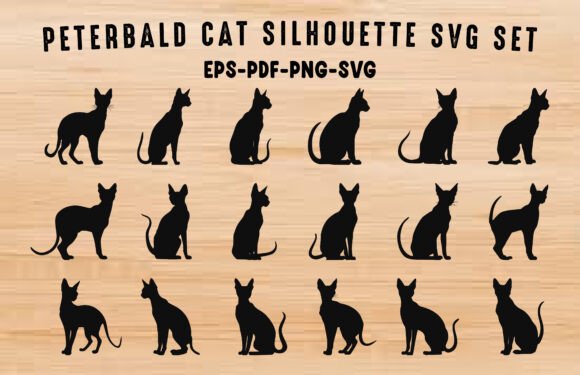
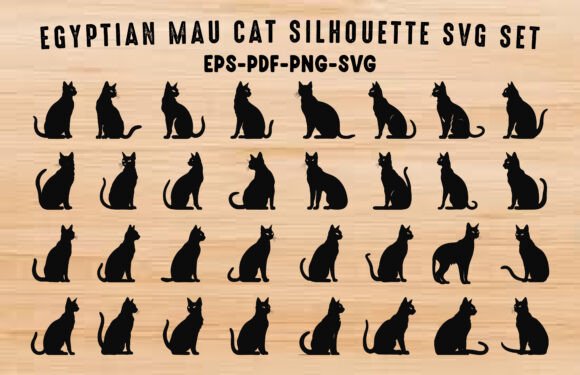
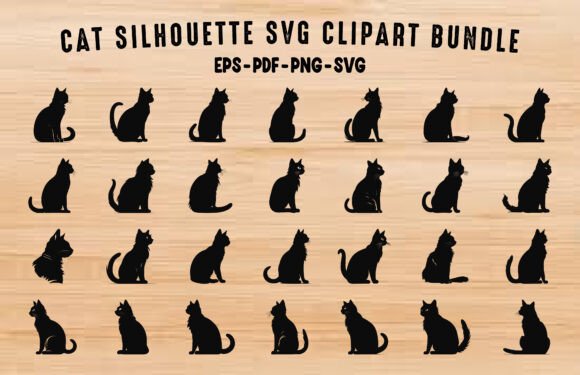
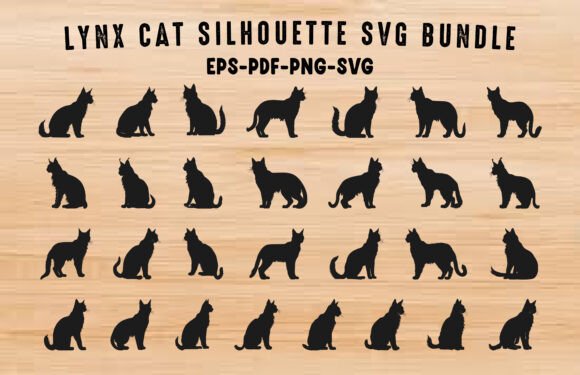
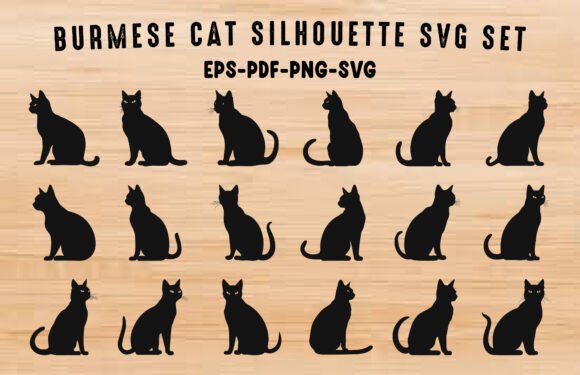
First impression? This isn’t a cutesy cartoon or an overly detailed portrait—it’s a poised, minimalist silhouette set that breathes quiet elegance. The Burmese Cat SVG Silhouette Clipart Set leans into the breed’s distinctive features: the wedge-shaped head, strong jawline, and subtly tapered tail—all rendered with smooth, unbroken contours. There’s no fussy interior line work, no shading, no gradients. Just pure, scalable vector shape. That simplicity is its biggest strength—and its most important constraint.
Why It Works So Well on Embroidery (and Where It Might Not)
I tested one of the silhouettes as a machine embroidery design on a medium-weight cotton tote bag—intended for a local boutique’s spring collection. No applique design, no satin stitch borders—just a clean fill stitch outline at 3.2" wide. The result? Crisp, confident, and instantly legible from six feet away. Customers paused mid-aisle. One asked, “Is that a Burmese? My grandmother had one.” That kind of quiet recognition is gold for handmade product branding.
The Burmese Cat SVG Silhouette Clipart Set shines brightest where subtlety meets intention: baby embroidery on organic cotton onesies, sweatshirt embroidery for cat-loving educators, embroidered patch applications on denim jackets, or even delicate pillow covers for a nursery with refined taste. Its minimalism avoids visual clutter—critical when stitching on textured fabrics like terry cloth tea towels or looped fleece blankets.
Real-World Limits You’ll Notice Before You Stitch
Don’t assume it’s universally adaptable. Because these are true silhouettes—not digitized embroidery files—the Burmese Cat SVG Silhouette Clipart Set needs thoughtful translation before hitting the hoop. I tried scaling one down to 1.5" for a child’s cap. On screen, it looked fine. In stitch? The tail tip vanished into noise. Tiny curves collapsed. That’s not a flaw in the design—it’s physics. Vector sharpness doesn’t auto-translate to stitch clarity.
Use caution on:
- Stretchy fabric (like jersey or ribbed knit) without proper cutaway stabilizer—silhouettes can warp during hooping
- Dark fabric with light thread—subtle contours lose definition unless you boost contrast intentionally
- Curved surfaces (caps, mugs, curved apron pockets) where distortion pulls lines out of proportion
- Frequent-wash items like baby clothes—tight fill stitch density helps, but avoid ultra-thin inner loops that fray over time
What This Means for Your Craft Business
If you’re an Etsy seller or small shop owner building a cohesive brand around gentle, intentional aesthetics, the Burmese Cat SVG Silhouette Clipart Set supports that voice beautifully. It reads as handmade *without* looking amateurish. It feels curated—not algorithm-generated. That perception directly lifts perceived value: customers pay more for pieces that feel considered, not mass-produced.
But here’s what matters more than mood: licensing clarity. Since this is a Graphics bundle marketed as instant download, confirm whether commercial use includes finished embroidered products *and* digital resale (e.g., selling your own embroidered tote mockup as a printable listing). Don’t assume—check the terms before uploading to your shop.
Practical Designer Notes—From Hoop to Customer Unboxing
Before committing to a client project or bulk production:
- Test on scrap fabric first—especially if using textured or dark material. See how the silhouette holds up after washing one sample.
- Check thread color contrast—a warm taupe on oatmeal linen reads softer than black on charcoal, but both work. Avoid near-matching tones unless that’s the deliberate effect.
- Review stitch density—silhouettes often digitize best with moderate fill stitch, not dense satin. Over-stuffing flattens character.
- Confirm hoop size compatibility—some poses extend vertically; measure before digitizing for a 4"x4" hoop.
- Inspect small details—the ear notch and tail taper matter. If they disappear post-digitizing, simplify or adjust manually.
- Test black-and-white mockups—this set lives or dies by contrast. If it fades in grayscale previews, rethink placement or background.
- Compare light vs. dark fabric backgrounds—what reads as elegant on ivory may read as vague on navy.
- Use appropriate stabilizer—cutaway for knits, tear-away for stable wovens. Silhouettes show every puckering flaw.
- Verify dual-use rights—personal stitching is rarely restricted, but commercial embroidery or digital product previews may require explicit permission.
Where It Fits Best—And Where It Doesn’t Try To
This isn’t a holiday embroidery design full of bows and glitter. It’s not built for tiny lettering or layered applique design combos. It doesn’t shout. It observes. That makes it perfect for: personalized gifts with quiet meaning (a memorial pillow, a pet-loss keepsake), boutique branding that avoids trend-chasing, nursery decor that matures with the child, and custom apparel for people who love cats but dislike cliché.
It’s less ideal for high-contrast streetwear, kids’ activity wear needing bold graphics, or complex multi-color embroidery projects. And while it’s listed under Illustrations, remember—it’s a starting point, not a finished embroidery file. You’ll need to digitize thoughtfully or partner with a digitizer who respects negative space and contour integrity.
A Final Thought for Makers Who Care
The Burmese Cat SVG Silhouette Clipart Set earns trust because it doesn’t overpromise. It’s not “cute,” “adorable,” or “trendy”—it’s *true*. That authenticity translates directly into customer resonance. When someone sees it stitched cleanly on a kitchen towel or baby blanket, they don’t just see a cat—they recognize care in selection, precision in execution, and respect for the craft. That’s the difference between a decoration and a detail that lingers.