Cute Relaxing Cat SVG
First Impressions: Soft, Simple, and Surprisingly Versatile
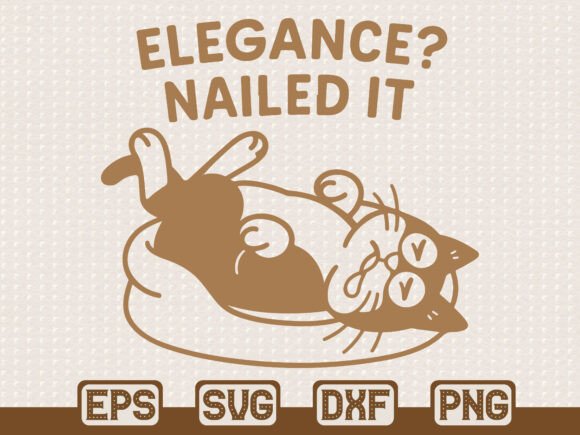
When I opened Cute Relaxing Cat SVG for the first time, I didn’t see just another cat graphic—I saw a quiet moment of calm rendered in clean, intentional shapes. The pose is gentle: curled tail, closed eyes, one paw tucked beneath, ears slightly forward—not sleepy, but *settled*. There’s no cluttered background, no exaggerated whiskers or cartoonish pupils. Just soft curves, balanced negative space, and a silhouette that breathes. It feels like something you’d stitch onto a linen tea towel for a friend who just became a new parent—or embroider on a cotton apron for a small-batch bakery. That’s the real strength of Cute Relaxing Cat SVG: it doesn’t shout. It invites.
A Real Project Test: Embroidering a Linen Tote for a Local Bookstore
Last week, I used Cute Relaxing Cat SVG to create embroidered tote bags for a neighborhood indie bookstore’s “Slow Reading Week” launch. We chose natural unbleached linen—textured, slightly uneven, and unforgiving with dense stitching. Before hooping, I converted the SVG to an embroidery file (using my standard vector-to-embroidery workflow) and ran a few key checks: stitch density was moderate (no heavy fill areas), the outline relied mostly on satin stitch with subtle running-stitch accents along the ear contour, and the smallest detail—the inner curve of the closed eye—was still comfortably above 2mm. On linen, it stitched cleanly with medium-weight cutaway stabilizer and 40-weight rayon thread. Customers loved how the design looked *handmade*, not mass-produced—even though it was machine-embroidered. That’s rare. It landed somewhere between illustration and craft: warm, intentional, quietly confident.
Where It Shines (and Where It Needs Thought)
Cute Relaxing Cat SVG works beautifully for:
- Embroidered patches—its compact shape and clear outlines hold up well when heat-applied or sewn on denim jackets or backpacks;
- Baby embroidery—think onesies, burp cloths, or organic cotton swaddle blankets; the serene expression reads as soothing, not cutesy;
- Tote bag design and tea towel embroidery—the generous negative space lets fabric texture show through, adding depth;
- Small shop product branding—ideal for boutique aprons, ceramic mug sleeves, or pillow covers where subtlety builds cohesion;
- Holiday embroidery and wedding gifts—a relaxed cat on a linen handkerchief or napkin set feels personal, not generic.
But—and this matters—it’s not universally forgiving. On stretchy fabric like lightweight knits or ribbed sweatshirts, I’d reduce stitch density manually and add a tear-away + cutaway hybrid stabilizer. On dark fabric, avoid light thread without testing contrast first—the design’s gentle contours can fade if thread lacks enough pop. And while it’s lovely on caps, the curved surface means you’ll want to test hoop placement carefully: the tail curl sits close to the edge, so centering matters more than usual. Also, skip using it for tiny hoop sizes under 4” unless you’re willing to simplify details—those delicate ear lines won’t resolve cleanly at 2.5”.
What It Does for Your Craft Business—Beyond the Stitch
As an Etsy seller and embroidery educator, I pay attention to how designs affect buyer trust and perceived value. Cute Relaxing Cat SVG elevates a handmade product because it feels curated—not algorithm-generated. When customers see it on a custom embroidered pillow cover, they don’t think “clip art.” They think “someone chose this *for me*.” That emotional resonance translates directly to repeat buyers and word-of-mouth referrals. For a craft business, it’s also commercially flexible: it reads equally well on minimalist nursery decor and cozy coffee shop merch. And because it’s built for clarity—not complexity—it scales gracefully across digital uses: printable mockups, social media previews, even simple SVG-based web banners for your shop.
Practical Embroidery Designer Notes (Not Just Theory)
Before stitching Cute Relaxing Cat SVG on your next project, here’s what I actually do:
- Test on scrap fabric first—especially if using textured, dark, or stretchy material;
- Check thread color contrast in both natural and artificial light—soft grays and oatmeals work, but avoid near-matches on heathered fabrics;
- Review stitch density in your embroidery software—trim any unnecessary underlay in the body area to prevent puckering on lightweight cotton;
- Confirm hoop size compatibility—this design fits comfortably in a 5x7 hoop, but verify before scaling up or down;
- Inspect small details at 200% zoom—make sure the eye line and inner ear curve won’t vanish in satin stitch;
- Test it in black-and-white mockups—if it loses shape or readability there, it’ll struggle on low-contrast products;
- Use proper stabilizer—cutaway for stable wovens, tear-away for stable knits, and always float for caps or layered garments;
- Confirm licensing—since this is marketed as a T-Shirt Designs bundle for POD platforms like Merch by Amazon and Redbubble, double-check whether commercial embroidery rights are included before selling finished items or bundling as design assets.
Final Thought: A Design That Earns Its Place
Cute Relaxing Cat SVG isn’t flashy—but then, the best machine embroidery design rarely is. It’s the kind of digital embroidery file that disappears into the product while making it feel more thoughtful, more human. Whether you’re stitching a personalized gift for a stressed teacher, building a cohesive line of small shop product, or creating holiday embroidery with heart, this design doesn’t distract. It settles in. And in a world full of visual noise, that kind of quiet confidence is exactly what makes a finished product memorable.