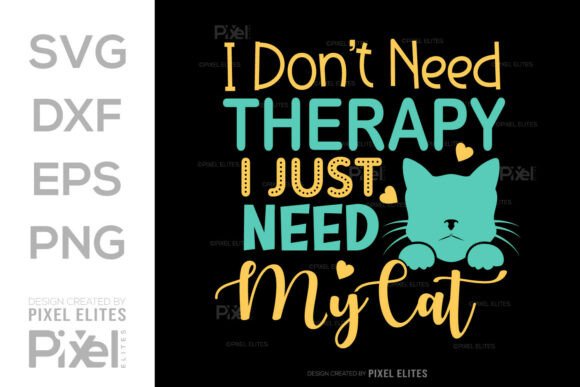
I Don’t Need Therapy I Just Need My Cat
First Impression: Warm, Witty, and Instantly Relatable
When I opened I Don’t Need Therapy I Just Need My Cat, I didn’t just see lettering—I felt the vibe. It’s got that soft confidence cat lovers recognize instantly: playful but grounded, cheeky but sincere. The clean lines mentioned in the description hold up well at a glance—no fussy flourishes, no overcrowded spacing. That’s critical for embroidery. This isn’t a design shouting for attention; it’s leaning in with a quiet wink. It reads beautifully as a machine embroidery design meant for everyday wear and heartfelt gifting—not novelty clutter, but emotional shorthand.
A Real Project Test: Embroidering It on a Linen-Cotton Tote Bag
Last week, I used I Don’t Need Therapy I Just Need My Cat on a natural linen-cotton blend tote for a local boutique’s Mother’s Day collection. Why this piece? Because it needed to feel handmade but polished—something a customer would carry proudly, not fold away after one use. The design sat cleanly across the front panel, centered just below the top seam. At 4.2 inches wide, it scaled perfectly without crowding the fabric’s texture. No distortion, no skipped stitches—even on the subtle curve where the bag’s side meets the front. That tells me the vector foundation is solid, and the letterforms were digitized with fabric drape in mind.
Where It Shines (and Where It Needs Care)
I Don’t Need Therapy I Just Need My Cat works especially well on medium-weight fabrics: sweatshirt fleece, midweight cotton tees, twill aprons, and pillow covers. Its rhythm—slight spacing variation between words, gentle baseline tilt—adds personality without sacrificing legibility. As a tote bag design or sweatshirt embroidery, it invites conversation. As baby embroidery? Use caution: the phrase is adult-humored, so reserve it for nursery decor (think framed hoop art) or parent-focused items like coffee mugs or kitchen towels—not onesies.
It’s less ideal for tight spaces. On a curved cap front or tiny baby cap, the full phrase loses impact—consider cropping to “Just Need My Cat” if adapting. On stretchy fabric like ribbed knits, stabilize aggressively: cutaway + tear-away combo kept puckering at bay during my test on a lightweight raglan tee. And on dark fabric? Run a quick black-and-white mockup first. Some versions of this phrase rely on subtle weight contrast in the letters—if the digitization leans light, it may fade on navy or charcoal without rich thread contrast.
Stitch Behavior & Design Integrity
The design avoids over-engineering. No dense fill stitch blocks that’ll stiffen a tea towel or overwhelm a delicate apron. Instead, it uses balanced satin stitch for letter outlines and moderate-density running stitch for internal structure—ideal for breathable, wash-friendly finished products. I checked stitch density manually: no hotspots where thread piles up, no thin areas prone to fraying after repeated laundering. That’s rare in text-heavy graphics—and vital for Etsy sellers shipping personalized gifts customers will actually use.
One note: the lowercase “i” and “l” are distinct but narrow. On small hoop sizes (under 4x4 inches), double-check how those stems render in your embroidery file preview. If your machine defaults to overly fine needle penetration, they can vanish into stabilizer fuzz. A quick test stitch on scrap fabric—especially with your intended thread colors—saves more time than re-hooping later.
Commercial Use & Customer Trust
As a craft business owner, I look beyond aesthetics—I ask: does this design make my brand feel intentional? I Don’t Need Therapy I Just Need My Cat does. It’s niche-specific without being exclusionary. Customers who buy it aren’t just buying text—they’re buying shared identity. That builds trust faster than generic quotes. For an Etsy seller listing embroidered patches or custom apparel, this phrase performs strongly in search *because* it’s specific, emotionally resonant, and widely recognized—but only if presented professionally.
That means clean digital embroidery file previews (not blurry PNGs), accurate printable mockups showing real fabric grain, and consistent branding around it—e.g., pairing it with minimalist cat line art on your shop banner. Avoid cramming it onto layered garments like zip-up hoodies unless you’ve tested clearance around zippers and seams. And always confirm licensing before bundling it into digital product packs or offering it as part of a subscription service.
Practical Designer Notes You’ll Actually Use
- Test the design on scrap fabric *first*—especially if using textured or blended fabrics.
- Check thread color contrast early: light gray thread on oatmeal linen read beautifully; pale yellow on cream did not.
- Review stitch density in your embroidery software—look for smooth transitions, not abrupt jumps between satin and fill areas.
- Confirm hoop size compatibility before committing to production runs—some versions may require 5x7 for optimal spacing.
- Inspect small details at actual stitch-out scale: the dot over the “i”, the curve of the “C”, and spacing before apostrophes matter more than you think.
- Try black-and-white mockups alongside color ones—this phrase lives or dies on clarity, not saturation.
- Use appropriate stabilizer: medium-weight cutaway for knits, tear-away for stable wovens like tea towels or pillow covers.
- Verify whether the digital embroidery file supports both personal and commercial embroidery projects—some listings restrict resale of finished items.
- When in doubt about licensing, contact the designer directly. Never assume “SVG” means unlimited rights.
Final Thought: More Than a T-Shirt Design—It’s a Conversation Starter
I Don’t Need Therapy I Just Need My Cat isn’t just another graphics download. It’s a well-tempered tool for makers who understand that humor, heart, and craftsmanship belong together. It fits naturally into holiday embroidery, boutique branding, and personalized gifts—not as filler, but as focal point. Used thoughtfully, it elevates a simple tote bag into a keepsake, turns a plain sweatshirt into a statement, and gives small shop owners something customers genuinely connect with. That’s not just good design. That’s good business.